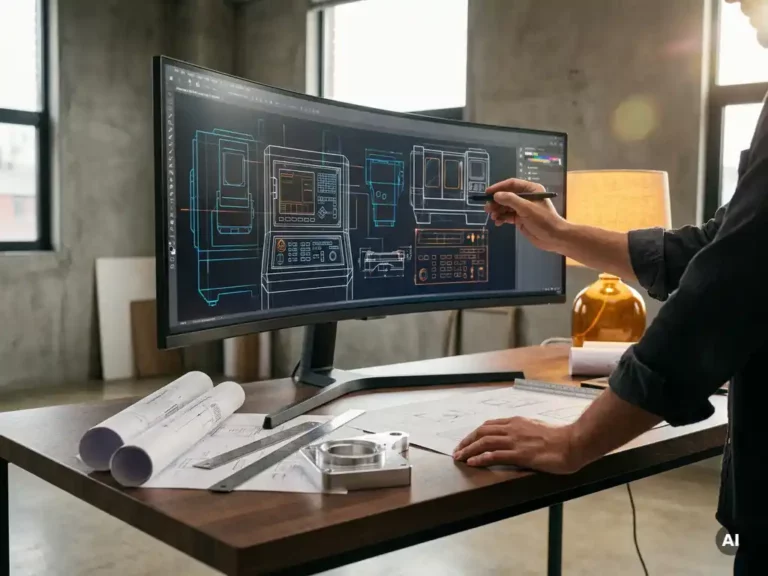
A UX optimization project in the industrial sector typically takes between three and nine months, depending on the complexity of the product, the number of user groups involved, and the scope of changes required. For highly complex B2B systems with multiple stakeholders, timelines can extend further. The sections below break down the key questions that shape how long your specific project will take.
What factors determine the length of a UX project in industry?
The length of a UX optimization project in the industrial sector is determined primarily by product complexity, the number of distinct user groups, the depth of research required, and how tightly UX work is integrated with engineering cycles. A focused redesign of a single interface can take three months; a system-wide optimization across multiple product lines may take a year or more.
Several specific factors consistently influence project duration in B2B and industrial contexts:
- Product complexity: Industrial equipment with layered control systems, safety-critical interfaces, or modular configurations requires more iteration than simpler consumer products.
- Stakeholder landscape: Operators, maintenance technicians, procurement managers, and engineers often have conflicting needs. Aligning these groups takes structured effort and time.
- Access to end users: In industrial environments, scheduling field research with machine operators or technicians is logistically demanding and can slow the research phase considerably.
- Regulatory and safety requirements: Industries such as medical technology, energy, or process automation require compliance reviews that add review cycles to the timeline.
- Integration with hardware development: When UX work must synchronize with mechanical or electronic engineering milestones, timelines are shaped by those external constraints.
Understanding these factors upfront allows teams to plan realistic timelines rather than discovering bottlenecks mid-project.
What are the typical phases of an industrial UX optimization project?
An industrial UX optimization project typically follows four core phases: discovery and research, analysis and strategy, design and prototyping, and validation and handoff. Each phase has a distinct purpose, and skipping any of them tends to produce solutions that look polished but fail in real operating conditions.
Discovery and research
This phase involves understanding the current state: how users interact with the product today, what pain points exist, and what business goals the UX improvements must serve. In industrial settings, this often includes on-site observation, contextual interviews, and a review of support tickets or error logs.
Analysis, design, and validation
Once research is complete, insights are synthesized into design principles and prioritized opportunities. Concepts are developed, prototyped, and tested with real users before final specifications are handed off to engineering. In complex industrial products, multiple rounds of prototype testing are common, particularly when safety or operational reliability is at stake. Our design and innovation services integrate these phases into a structured process that keeps projects on track without sacrificing rigor.
How long does the user research phase take in B2B environments?
The user research phase in B2B and industrial environments typically takes four to eight weeks. This is longer than in consumer product design because access to real users is harder to arrange, the user groups are more specialized, and the operating contexts often require on-site visits rather than remote sessions.
Several realities specific to industrial UX extend research timelines:
- Machine operators and technicians are rarely available for interviews during production hours, requiring research to be scheduled around shift patterns or planned maintenance windows.
- Industrial facilities may require safety briefings, non-disclosure agreements, or security clearances before researchers can enter.
- The diversity of user roles means research must cover multiple profiles, not just one primary persona, which multiplies the number of sessions needed.
Rushing this phase is one of the most common mistakes in industrial UX projects. The insights gathered here directly determine whether the resulting design actually fits how people work, rather than how designers imagine they work.
Does a faster UX project deliver worse results?
Not necessarily. A faster UX project can deliver strong results if the scope is tightly defined, existing user research is already available, and the team has deep domain knowledge. What consistently produces poor outcomes is compressing timelines by skipping research or reducing testing, rather than by working more efficiently within a focused scope.
Speed and quality are compatible when:
- The project targets a specific, well-understood problem rather than a broad systemic redesign.
- Stakeholders are aligned before the project starts, reducing revision cycles later.
- The design team has prior experience with the product category or industry, reducing the learning curve during discovery.
- Rapid prototyping tools allow fast iteration without sacrificing the quality of user testing.
The danger zone is when shorter timelines are achieved by eliminating validation steps. In industrial environments where usability errors can affect safety, productivity, or regulatory compliance, skipping testing creates risks that far outweigh the time saved.
When should UX optimization happen in a product development cycle?
UX optimization delivers the greatest value when it begins during the concept and definition phase of product development, before major engineering decisions are locked in. Integrating UX work early means that insights about user needs can actually shape the product, rather than being applied as cosmetic adjustments to a design that is already structurally fixed.
That said, UX optimization is also valuable at later stages, particularly when an existing product is being updated or extended. In these cases, the optimization targets specific pain points rather than foundational architecture, which makes the scope more contained and the timeline shorter.
A useful way to think about timing is in terms of the cost of change. Early in development, changing a workflow or control layout costs relatively little. After tooling and engineering are complete, the same change can be prohibitively expensive. UX investment made early in the cycle consistently delivers a higher return than reactive improvements made after launch.
For industrial companies planning a new product generation or a platform update in 2026, now is the right moment to begin UX work, before engineering constraints narrow the design space.
How code2design supports UX optimization in industrial design
We bring over 25 years of experience helping industrial and technology companies turn complex user needs into products that are both technically excellent and genuinely intuitive to use. Our holistic 360° design approach means we look at UX not as a standalone deliverable, but as a strategic layer that shapes brand perception, product differentiation, and long-term market success.
When you work with us on a UX optimization project, you can expect:
- Structured discovery: We conduct user research directly in industrial environments, including on-site observation and stakeholder interviews, to build an accurate picture of how your product is actually used.
- Strategic alignment: We connect UX findings to your broader product strategy and brand identity, so improvements serve both user needs and business goals.
- Iterative prototyping: We test concepts with real users before engineering commits to specifications, reducing costly late-stage revisions.
- Cross-disciplinary expertise: Our team combines industrial design, interface design, and innovation management, giving you integrated thinking rather than siloed deliverables.
- Proven B2B track record: With more than 75 international design awards and long-standing partnerships with industrial clients, we understand the specific demands of the B2B sector.
If you are planning a product update or new development in 2026 and want to understand how UX optimization could fit into your timeline and budget, we would be glad to talk through your project in a no-obligation conversation.