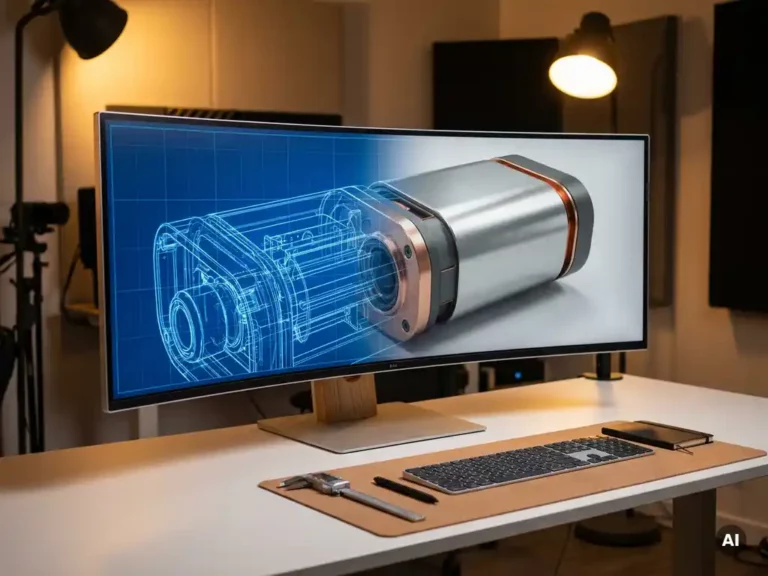
UX design is becoming essential for hardware companies because buyers no longer evaluate physical products on function alone. They judge the entire experience of using a product, from first touch to long-term ownership. As software-driven interfaces become standard in everything from industrial tools to consumer electronics, hardware companies that ignore UX design risk losing ground to competitors who treat experience as a core product feature.
This shift is reshaping how hardware is developed, marketed, and sold across every industry. The questions below unpack why it matters, what it actually involves, and how hardware companies can act on it.
How does poor UX hurt hardware products in the market?
Poor UX in hardware products directly reduces adoption, increases returns, and damages brand perception. When users struggle to operate a product, need repeated support, or feel frustrated during routine tasks, they associate that frustration with the brand itself. In competitive markets, a technically superior product with a poor user experience will consistently lose to a simpler, more intuitive alternative.
The commercial consequences are concrete. Products with confusing interfaces generate higher support costs. Devices that require extensive training see slower adoption in professional environments. And in consumer markets, negative reviews about usability spread quickly, suppressing future sales long after a product launches.
Beyond individual products, poor hardware UX erodes trust in an entire product line. A single frustrating experience leads users to question whether the next product from that company will be any different. Building strong product design services around user experience from the start protects against this compounding damage.
What does UX design actually involve in a hardware context?
UX design for hardware involves every decision that shapes how a person interacts with a physical product, including the layout of controls, the feedback a device gives, the ergonomics of how it sits in the hand, and any digital interface embedded within it. It goes well beyond aesthetics to address how intuitive, efficient, and satisfying a product is to use in real conditions.
In practice, hardware UX design typically covers:
- User research: Understanding who uses the product, in what context, and what problems they are actually trying to solve
- Interaction design: Defining how controls, displays, and feedback mechanisms work together to guide the user
- Ergonomics and physical usability: Ensuring the product fits naturally into how people move and work
- Interface design: Designing any screens, buttons, or digital touchpoints embedded in the hardware
- Usability testing: Validating design decisions with real users before production
The goal is to close the gap between what a product is capable of and what a user can actually get out of it without friction or confusion.
Why are hardware buyers now expecting software-level experiences?
Hardware buyers now expect software-level experiences because decades of smartphone and app design have fundamentally raised the bar for what intuitive interaction feels like. Users who navigate complex applications with a few taps carry those expectations into every product they pick up, whether it is a medical device, a power tool, or an industrial machine.
This expectation is not limited to consumer markets. In B2B environments, procurement decisions increasingly factor in ease of use alongside technical specifications. Decision-makers know that a product requiring extensive operator training is a cost, not just a feature. Products that feel immediately usable reduce onboarding time and operational risk.
The rise of connected hardware has also blurred the line between physical product and digital service. When a device connects to an app, a dashboard, or a cloud platform, users evaluate the product as a system. A well-engineered device paired with a clunky interface feels like a broken product, regardless of what the hardware itself does. In 2026, this integration of physical and digital experience is no longer a differentiator. It is a baseline expectation.
When in the product development process should UX be integrated?
UX design should be integrated from the very beginning of product development, ideally during the discovery and concept phase before any engineering decisions are locked in. Waiting until a product is near production to consider user experience leads to costly redesigns, compromised interfaces, and missed opportunities to shape the product around genuine user needs.
Early UX integration allows teams to:
- Identify real user problems before committing to a solution direction
- Test interaction concepts with low-cost prototypes rather than finished hardware
- Align industrial design and engineering decisions with usability requirements from the start
- Avoid retrofitting interface elements onto a product architecture that was never designed to support them
The further into development UX is introduced, the more constrained the design team becomes. Structural choices made early in engineering define what is and is not possible for the user interface later. Embedding UX thinking from the first phase of product development ensures those early decisions serve the user, not just the manufacturing process.
What’s the difference between industrial design and UX design for hardware?
Industrial design and UX design for hardware are complementary disciplines that address different dimensions of the product experience. Industrial design focuses on the physical form of a product, including its shape, materials, proportions, and visual identity. UX design focuses on how a person interacts with that product, including the logic of its controls, the clarity of its feedback, and the overall ease of accomplishing tasks.
In practice, the two disciplines overlap significantly in hardware development. A button’s placement is an industrial design decision, but whether a user can find and operate it intuitively is a UX concern. The best hardware products emerge when both disciplines inform each other throughout the process rather than operating in separate silos.
A useful way to think about the distinction:
- Industrial design answers: What does the product look like, feel like, and communicate as a physical object?
- UX design answers: How does the user understand, navigate, and accomplish their goal with this product?
Neither question can be answered well without considering the other. Companies that treat them as separate workstreams often end up with products that look impressive but frustrate users, or that work well but fail to communicate their value.
How can hardware companies start embedding UX into their design process?
Hardware companies can start embedding UX into their design process by introducing user research early, establishing clear usability criteria alongside technical specifications, and involving UX designers in cross-functional product teams from the concept stage. The shift does not require a complete overhaul of existing processes. It requires adding structured attention to the user’s perspective at each decision point.
Practical starting points include:
- Run contextual user research before defining product requirements. Observe users in the environments where the product will actually be used.
- Create interaction prototypes early using simple physical mockups or digital simulations to test usability before engineering resources are committed.
- Define usability goals alongside performance specifications so that ease of use is treated as a measurable product requirement.
- Include UX review at every design gate so that user experience is evaluated at each stage of development, not only at the end.
- Test with real users repeatedly rather than relying on internal assumptions about how people will interact with the product.
The cultural shift matters as much as the process change. When engineering and product teams start treating user experience as a shared responsibility rather than a design department concern, the quality of decisions at every level improves.
How code2design helps hardware companies integrate UX design
We work with hardware companies to build user experience into the product from the ground up, combining industrial design expertise with deep UX thinking across the full development process. At code2design, our 360° design approach means we examine every dimension of how a product will be used, not just how it will look or perform in isolation.
Our support for hardware UX covers:
- User research and insight development to ground design decisions in real user behavior and context
- Interaction and interface design for both physical controls and embedded digital touchpoints
- Integrated product development where industrial design and UX design inform each other throughout every phase
- Usability testing and iteration to validate decisions before they become production commitments
- Strategic positioning to ensure the product experience reinforces brand identity and supports long-term market success
With over 25 years of experience and more than 75 international design awards, we bring both the creative depth and the strategic perspective that hardware UX demands. If your company is ready to treat user experience as a competitive advantage rather than an afterthought, get in touch with our team to start the conversation.
Ähnliche Artikel
- Welche Kommunikationsfehler führen zu schlechten Industriedesign Ergebnissen?
- What is the difference between innovation and invention?
- What are the benefits of co-creation in product development?
- How do you find the right industrial designer for B2B products?
- Was ist der Unterschied zwischen Industriedesign und Produktdesign?