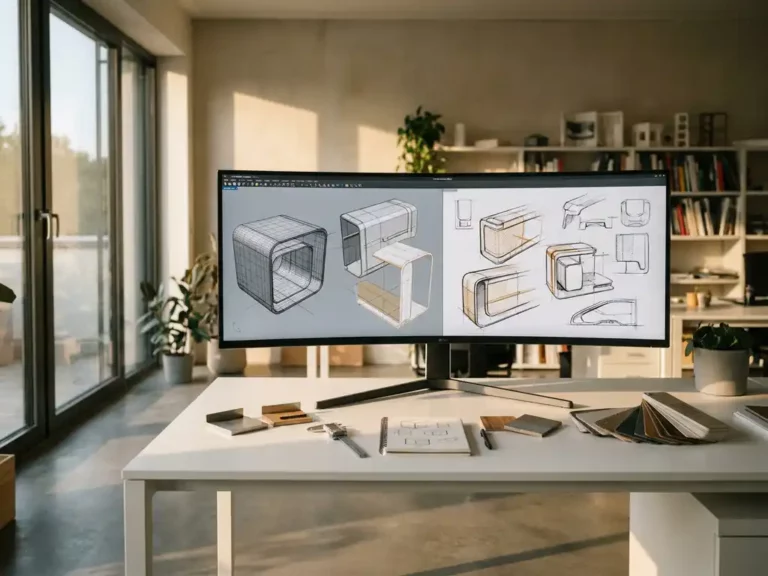
Product development in 2026 is being shaped by five major trends: AI-driven workflows that accelerate design iterations, sustainability requirements that influence every material choice, smart technologies creating new interaction paradigms, breakthrough materials enabling previously impossible innovations, and remote collaboration tools transforming how design teams work together. These trends are fundamentally changing how products are conceived, developed, and brought to market, creating both opportunities and challenges for design teams worldwide.
The convergence of these trends means that successful product development now requires balancing technological capabilities with environmental responsibility, user-centered design with intelligent automation, and global collaboration with local market needs. Understanding these shifts helps design teams navigate the evolving landscape and create products that resonate with modern consumers while meeting tomorrow’s challenges.
How is artificial intelligence changing product development workflows?
Artificial intelligence is streamlining product development by automating repetitive design tasks, generating multiple concept variations rapidly, and providing data-driven insights that inform design decisions throughout the development process. AI tools now handle everything from initial concept sketching to performance simulation, allowing designers to focus on strategic thinking and creative problem-solving.
The most significant impact comes from AI’s ability to process vast amounts of user data and market research, translating insights into actionable design recommendations. Machine learning algorithms analyze user behavior patterns, identify pain points, and suggest solutions that human designers might overlook. This creates a more informed foundation for design decisions.
AI-powered generative design tools have revolutionized the ideation phase. These systems can produce hundreds of design variations based on specified parameters like material constraints, performance requirements, and aesthetic preferences. What previously took weeks of manual iteration now happens in hours, dramatically accelerating the concept development timeline.
Predictive analytics help teams anticipate market trends and user needs before they become obvious. AI models analyze social media sentiment, search patterns, and purchasing behavior to forecast emerging preferences, enabling proactive product development rather than reactive responses to market changes.
What role does sustainability play in modern product design decisions?
Sustainability now drives core design decisions from material selection and manufacturing processes to end-of-life disposal strategies, with environmental impact assessment integrated into every stage of product development rather than treated as an afterthought. Modern design teams evaluate carbon footprints, recyclability, and resource efficiency as primary design criteria.
Circular design principles have become standard practice, requiring products to be designed for disassembly, repair, and material recovery. This approach fundamentally changes how designers think about product architecture, moving away from planned obsolescence toward modular, upgradeable systems that extend product lifecycles.
Material innovation focuses heavily on bio-based alternatives and recycled content. Designers now work with materials like mycelium-based packaging, recycled ocean plastics, and plant-based composites that offer comparable performance to traditional materials while significantly reducing environmental impact. These choices require a deep understanding of material properties and manufacturing constraints.
Life cycle assessment tools have become integral to the design process. Teams use sophisticated software to model environmental impacts across the entire product journey, from raw material extraction through manufacturing, use, and disposal. This data directly influences design decisions, creating products that optimize for a minimal environmental footprint.
Consumer expectations for sustainable products have intensified, making environmental responsibility a competitive advantage rather than just a compliance requirement. Brands that demonstrate genuine commitment to sustainability through thoughtful design choices build stronger customer loyalty and market differentiation.
How are smart technologies reshaping user interaction paradigms?
Smart technologies are creating intuitive, context-aware interfaces that anticipate user needs and adapt to individual preferences, fundamentally shifting from manual control paradigms to predictive, ambient computing experiences that seamlessly integrate into daily routines. Voice control, gesture recognition, and AI-powered personalization are becoming standard expectations.
Voice interfaces have evolved beyond simple command recognition to natural conversation capabilities. Products now understand context, remember previous interactions, and engage in multi-turn dialogues that feel genuinely helpful rather than robotic. This requires designing for conversational flows rather than traditional menu structures.
Gesture and touch-free interaction gained momentum during health-conscious periods and continues to expand as the technology matures. Spatial computing and computer vision enable products to respond to hand movements, eye tracking, and body positioning, creating more hygienic and accessible interaction methods.
Adaptive interfaces learn from user behavior to customize experiences automatically. Smart products observe usage patterns and gradually adjust settings, recommendations, and interface layouts to match individual preferences without requiring manual configuration. This creates products that become more valuable over time.
Cross-device ecosystems enable seamless experiences across multiple touchpoints. Users expect to start interactions on one device and continue on another, requiring designers to think beyond individual products toward comprehensive service ecosystems that maintain context and continuity.
What new materials are enabling breakthrough product innovations?
Advanced materials like programmable matter, self-healing polymers, and bio-integrated composites are enabling products with previously impossible capabilities such as shape-changing structures, automatic repair functions, and living material integration. These materials are transforming fundamental assumptions about what products can do and how they behave.
Programmable materials respond to environmental stimuli like temperature, light, or electrical signals to change their properties or shape. Shape-memory alloys and thermochromic polymers create products that adapt to conditions automatically, opening possibilities for clothing that adjusts to weather or furniture that reconfigures for different uses.
Self-healing materials extend product lifespans by automatically repairing minor damage. Polymer systems with embedded healing agents can seal cracks and scratches without human intervention, particularly valuable for protective coatings, electronic enclosures, and infrastructure applications where maintenance access is difficult.
Bio-integrated materials blur the boundary between living and manufactured systems. Mycelium-based materials grow into desired shapes, bacterial cellulose creates leather-like surfaces, and algae-derived plastics offer renewable alternatives to petroleum-based polymers. These materials often provide superior performance while supporting regenerative manufacturing processes.
Nano-engineered materials deliver exceptional performance in minimal space. Carbon nanotube composites offer strength-to-weight ratios far exceeding traditional materials, while nanostructured surfaces provide self-cleaning, antimicrobial, or super-hydrophobic properties without chemical additives.
How is remote collaboration changing design team dynamics?
Remote collaboration tools have evolved beyond video calls to create shared virtual workspaces where distributed teams can iterate on 3D models, conduct real-time design reviews, and maintain creative momentum across time zones through asynchronous collaboration workflows and persistent digital environments. Geographic boundaries no longer limit team composition or creative processes.
Virtual reality collaboration platforms allow teams to meet inside 3D design environments where they can manipulate models, sketch concepts, and conduct spatial reviews as if physically present together. These immersive sessions often prove more effective than traditional screen-sharing for complex spatial design challenges.
Asynchronous design workflows accommodate global teams working across multiple time zones. Version control systems, automated documentation, and structured handoff processes ensure continuous progress without requiring simultaneous availability. Teams can maintain 24-hour development cycles with proper coordination.
Digital twin environments provide persistent shared spaces where team members can access complete project history, understand design rationale, and contribute meaningfully regardless of when they join the project timeline. This creates institutional knowledge that survives team changes and project transitions.
Hybrid collaboration models combine the benefits of in-person creative sessions with remote accessibility. Teams strategically plan intensive collaboration periods while maintaining distributed daily workflows, optimizing for both creative breakthrough moments and sustained productivity.
How code2design helps with product development trends
We integrate these emerging trends into our comprehensive innovation management process, helping companies navigate the complex landscape of modern product development through our systematic, user-centered approach. Our team combines deep expertise in AI-assisted design workflows, sustainable material selection, and smart technology integration to create products that anticipate future market needs.
Our services address these trends through:
- AI-enhanced innovation workshops that accelerate concept generation and validation
- Sustainability assessment frameworks that evaluate environmental impact throughout the design process
- Smart technology integration strategies that create intuitive, adaptive user experiences
- Advanced material research and selection guidance for breakthrough innovations
- Remote collaboration methodologies that maintain creative excellence across distributed teams
Ready to transform your product development approach for 2026 and beyond? Explore our innovation management services to discover how we can help you leverage these trends for sustainable market success.
Ähnliche Artikel
- What role does ethnography play in product development?
- Welche Patente brauchen Sie für Ihre Produktentwicklung?
- Welche Rolle spielt 3D-Druck in der modernen Produktentwicklung?
- How do you protect your intellectual property during development?
- Which factors influence the cost of industrial design services?